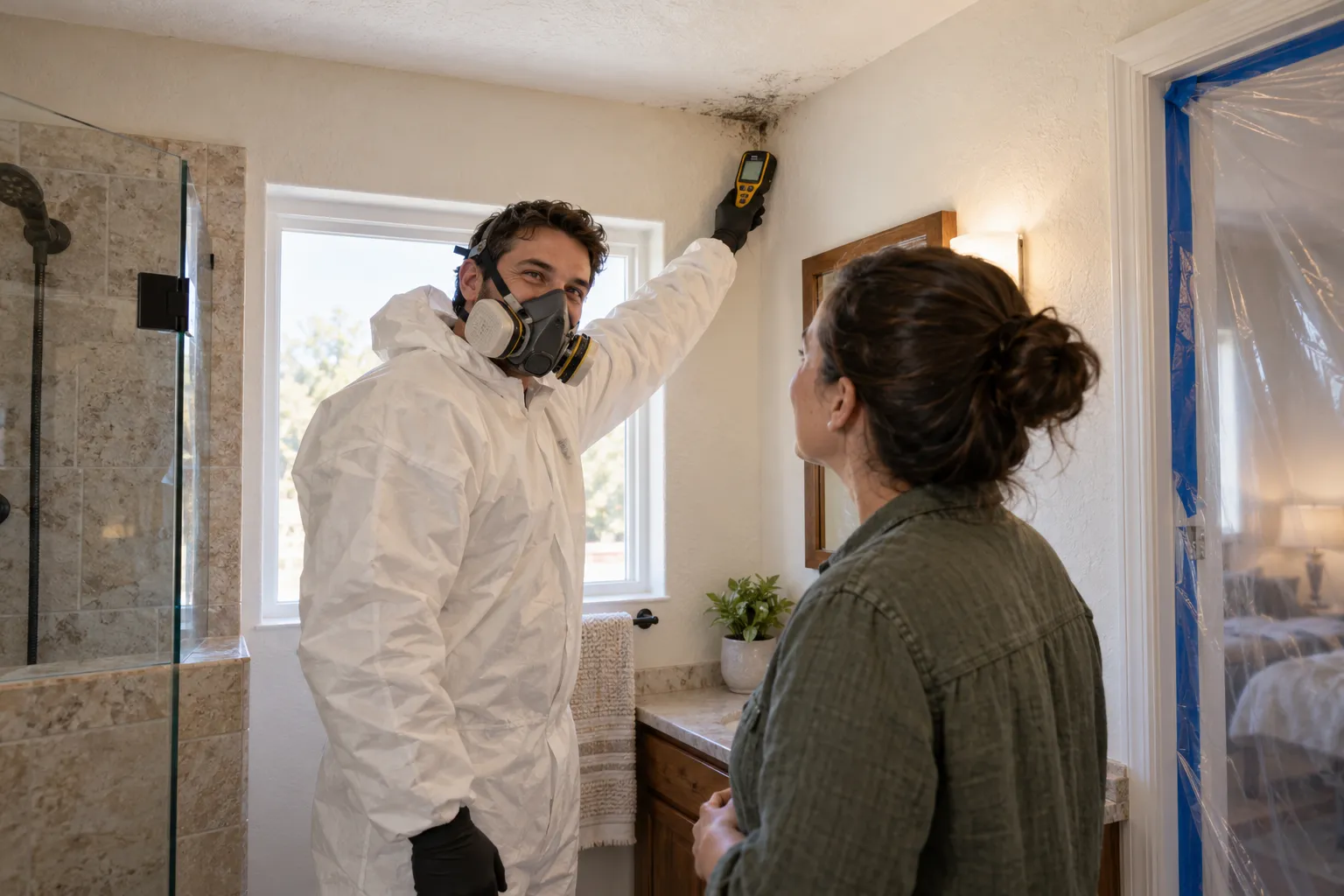
Seeing dark, fuzzy patches in your home can make your stomach drop. Take a breath. Plenty of homeowners have been here, and it is a problem that can be fixed. Marshallfeet Mold Help is a referral service. We connect you with independent providers in the San Jose area who handle black mold removal.
The providers in our network do the work. Marshallfeet Mold Help does not. What we can do is help you understand the process, ask good questions and compare options without pressure. The goal is simple: get the mold removed, find out why it grew, and make sure it has a hard time coming back. Fix it, keep it fixed.
Found Black Mold? Start Here
First, breathe. Most mold problems are slower than they feel, and you have time to do this right.
Here is what helps right now:
- Leave the patch alone. Do not scrub, sand or spray it.
- Turn off fans that blow across it, so spores do not spread.
- Keep kids, pets and anyone with breathing trouble away from the room.
- If water is still leaking, shut off the supply if you can.
Then reach out to a provider. Request a callback to check provider availability in your area.
What People Mean by Black Mold
The name sounds scary, but not every dark patch is the same. Mold comes in many colors, and you cannot tell the type by looking. Dark spots can be several kinds.
What matters is simple. Mold means there is moisture, and it should be handled safely. A provider can look at the area and tell you what they see and what they recommend.
Where It Likes to Hide
Mold wants damp, still, dark places. In homes like many stucco ranches and older bungalows, that often means:
- Behind and under sinks
- Around window frames after winter rain
- Inside closets on cold outside walls
- Bathroom ceilings with weak fans
- Crawl spaces under raised foundations
- Along slab edges where moisture wicks up
Smoke seasons matter too. When you keep windows shut for days, indoor humidity can climb. Cooking, showers and laundry add up.
Why Bleach Usually Isn't Enough
It is tempting to grab a bottle and scrub. Many people do. The wall looks clean for a while.
The trouble is that bleach may lighten the stain without dealing with what is growing in porous things like drywall, wood and insulation. The moisture is still there too. So the mold often comes back, sometimes worse.
A trained provider uses methods meant to remove the growth, not just hide it.
How Black Mold Removal Works
Every home is different, but the usual path looks like this.
Looking Over the Area
The provider checks how far the mold spreads and what it is growing on. They may use a moisture meter to find hidden damp spots.
Sealing Off the Space
Plastic sheeting and air filtration help keep spores from drifting into the rest of your home while the work happens.
Removing and Cleaning
Damaged porous materials, like soaked drywall, are often cut out and bagged. Solid surfaces are cleaned with special tools and HEPA vacuums.
Drying and Rechecking
The space is dried fully before anything is rebuilt. Many providers then check the area again to confirm the work is done.
Find the Moisture
This is the part people skip, and it matters most. Mold is a symptom. Water is the cause.
A leaky pipe, a roof flashing gap, a clogged gutter, poor drainage near the foundation or a bathroom with no real vent can all feed it. If the source stays, the mold returns. Ask the provider to point out where the moisture came from, and who should fix it.
Fix It, Keep It Fixed
Once the work is done, a few habits make a big difference.
- Run bathroom fans during showers and for a while after.
- Keep indoor humidity under about 50 percent. A small meter costs little.
- Clean gutters before the rainy season and aim downspouts away from the house.
- Look under sinks and around windows every few months.
- Open vents in crawl spaces and keep the soil covered if needed.
- Wipe up spills and condensation quickly.
These small checks are easy to forget, so put them on your calendar.
What About Your Belongings
Hard items like glass, metal and sealed wood can often be cleaned. Soft items, like old mattresses, carpet and stuffed furniture, are harder. Some can be saved, and some cannot. Ask the provider what they suggest, and take photos before anything is thrown out.
A Quick Word on Insurance
Some policies may cover sudden damage, like a burst pipe, but slow leaks are often treated differently. Check your policy. Providers can often help document damage for a claim.
Ask Before You Hire
You do not need to be an expert. You only need a few good questions.
Questions Worth Asking
- Are you licensed and insured where I live?
- What will the written quote include?
- How will you keep spores contained?
- How will you find and report the moisture source?
- Will you recheck the area after the work?
A good answer is clear, calm and specific. The provider explains, not pushes.
Red Flags
- Pressure to sign on the spot
- A quote with no detail
- Promises that mold will never return
- No plan for the moisture
If something feels off, it is fine to get another quote. Ask before you hire.
What's Included
Careful Mold Removal
Providers remove dark mold growth using containment and HEPA tools to protect the rest of your home.
Moisture Source Check
A good provider looks for the leak, humidity or drainage problem behind the mold so you know what caused it.
Safe Cleanup
Damaged materials are bagged and removed, and hard surfaces are cleaned with proper tools.
Prevention Tips
Many providers share simple steps to lower humidity and help keep the mold from returning later.
What Black Mold Removal Typically Costs
Prices vary a lot by job size, location and materials. These are typical U.S. ranges only, not quotes. Always ask for a written quote before work starts.
| Item | Typical range | Notes |
|---|---|---|
| Small area (under 10 sq ft) | $400 – $1,200 | Often a bathroom corner or a closet wall |
| Medium area (one room) | $1,500 – $4,000 | May include removing drywall |
| Large or multi-room job | $4,000 – $10,000+ | More containment and drying time |
| Crawl space or attic | $1,500 – $6,000 | Access and insulation affect price |
| Drywall and insulation replacement | $500 – $3,000 | Rebuilding is sometimes billed separately |
| Moisture repair (leak or drainage) | $300 – $3,000+ | Depends on the source and who fixes it |
How It Works
Reach Out
Request a callback to check provider availability, or use the request form to ask for an estimate.
Provider Looks It Over
A local provider checks the area, finds how far it spreads and explains the plan.
Containment and Removal
The space is sealed off, and the mold and damaged materials are carefully removed.
Dry, Recheck and Prevent
The area is dried and checked, and you get tips to help keep it dry.
Why Call Marshallfeet Mold Help
Independent Local Providers
Providers in our network are local businesses that know the homes and weather in your area.
Plain Answers
You get help asking clear questions, so you understand the work before you agree to anything.
No Pressure
Requesting an estimate carries no obligation, and you can compare options at your own pace.
Prevention Focus
The goal is not only removal. It is understanding the cause so mold stays away.
Other Services

Need black mold removal services in San Jose?
Questions about mold? Request a callback to check provider availability, or write to contact@marshallfeet.garden. Every request comes with no obligation.
No obligationBlack Mold Removal Services FAQ
Is black mold dangerous to have in my house?
Mold can bother some people, especially those with allergies, asthma or weak immune systems. You cannot tell the type by color alone. It is wise to limit contact and have a provider look at it soon.
Can I remove black mold myself with bleach?
Bleach often fails on porous materials and does not fix the moisture. Very small spots on hard surfaces may be manageable, but larger or repeat patches are better left to a local provider.
How do I keep black mold from coming back?
Find and fix the water source, then keep humidity low. Use bathroom fans, clear gutters, and check under sinks and around windows often. Ask your provider for tips that fit your home.
Reach a local provider
Questions about mold? Request a callback to check provider availability, or write to contact@marshallfeet.garden. Every request comes with no obligation.
No obligation